You spent a week in China, visited companies and research institutions, and participated in an international conference. What were you looking to find out?
I wanted to see firsthand how AI and robotics are developing in China. You read a lot about it, but it's different being there, talking to people, and visiting companies or research institutions. Only then do you get a sense of how they work and what drives the developments.
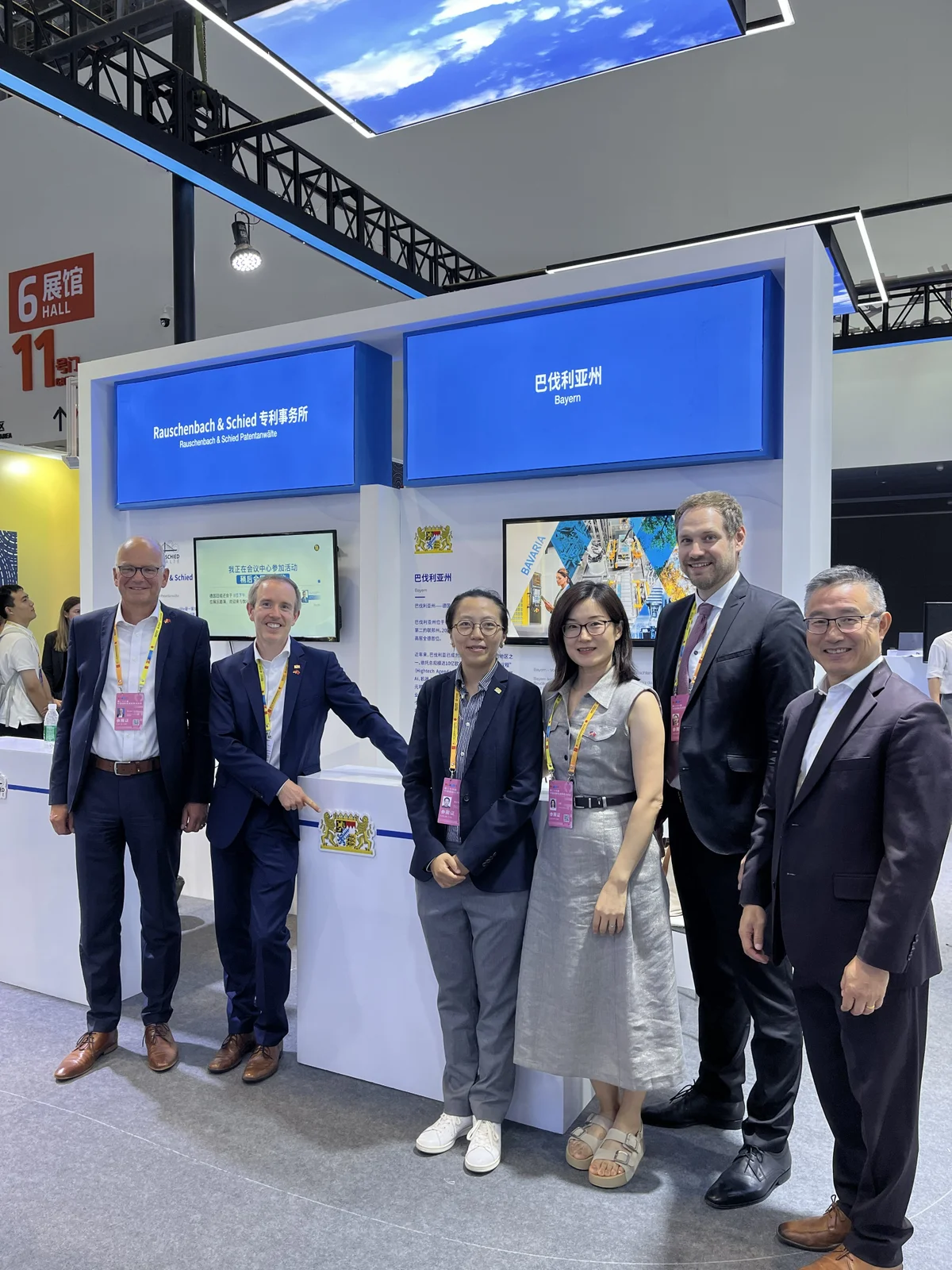
One occasion was the China International Fair for Investment & Trade, CIFIT, in Xiamen. Together with representatives from the Bavarian Ministry of Economic Affairs, I also visited companies, research institutions, and start-up ecosystems. We were interested in finding points of connection for Bavaria.
And what impressed you the most on site?
Mainly the speed, the willingness to experiment, and the confidence with which new things are approached. I was less impressed by a single technology than by the speed with which ideas are implemented.
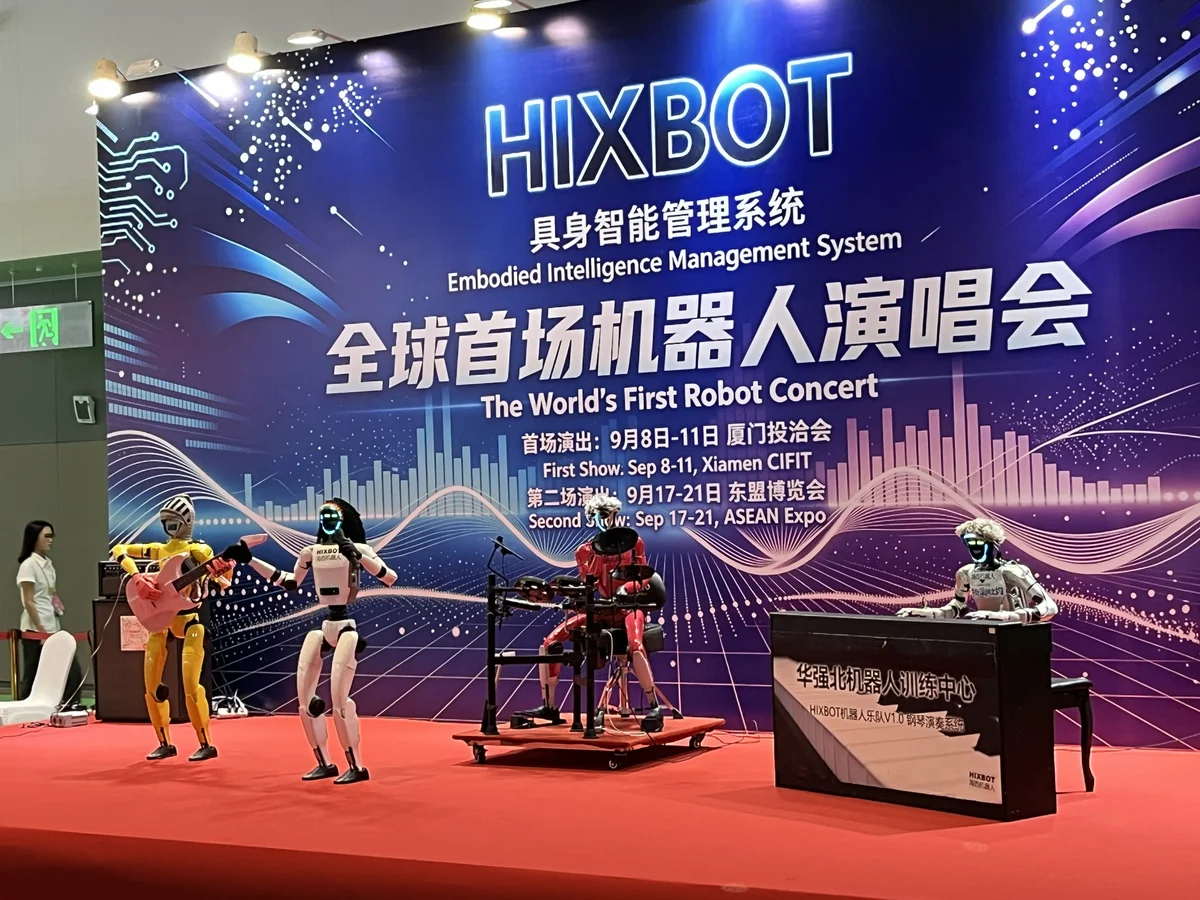
Of course, not everything that moves and blinks is a world leader in technology. Not every robot and drone will become a successful product. But a lot is tried out, and lessons are learned even from failures. What proves itself can then be quickly deployed on a large scale.
Where was this dynamism particularly noticeable?
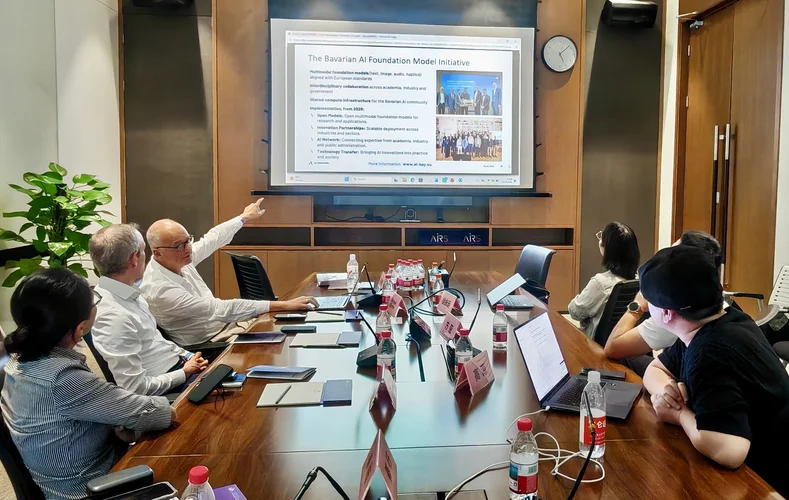
It was particularly evident in Shenzhen. AI, robotics, electronics, production, and research are close to each other there. This proximity makes it easier to quickly put ideas into practice. This was also apparent during the visit to the Shenzhen Institute of Artificial Intelligence and Robotics for Society (AIRS), where AI and robotics are specifically combined for practical applications.
At Siemens Healthineers, we learned a different perspective. It became clear what significance China has for a global company: as a market, as a production site, and as a development site. All of this is closely intertwined with the company's global value creation and innovation processes.
What can we take away from this for Bavaria?
Above all, the willingness to try new things and learn from the results. Even if an attempt fails, it's not a wasted effort. You know more afterward than before.
Bavaria has excellent research, innovative companies, and many support and transfer offers. The key is to bring these competencies together more quickly and to translate research results more consistently into applications. We can learn something from China here without wanting to copy its system.
This requires local contacts. How well-connected is Bavaria already?
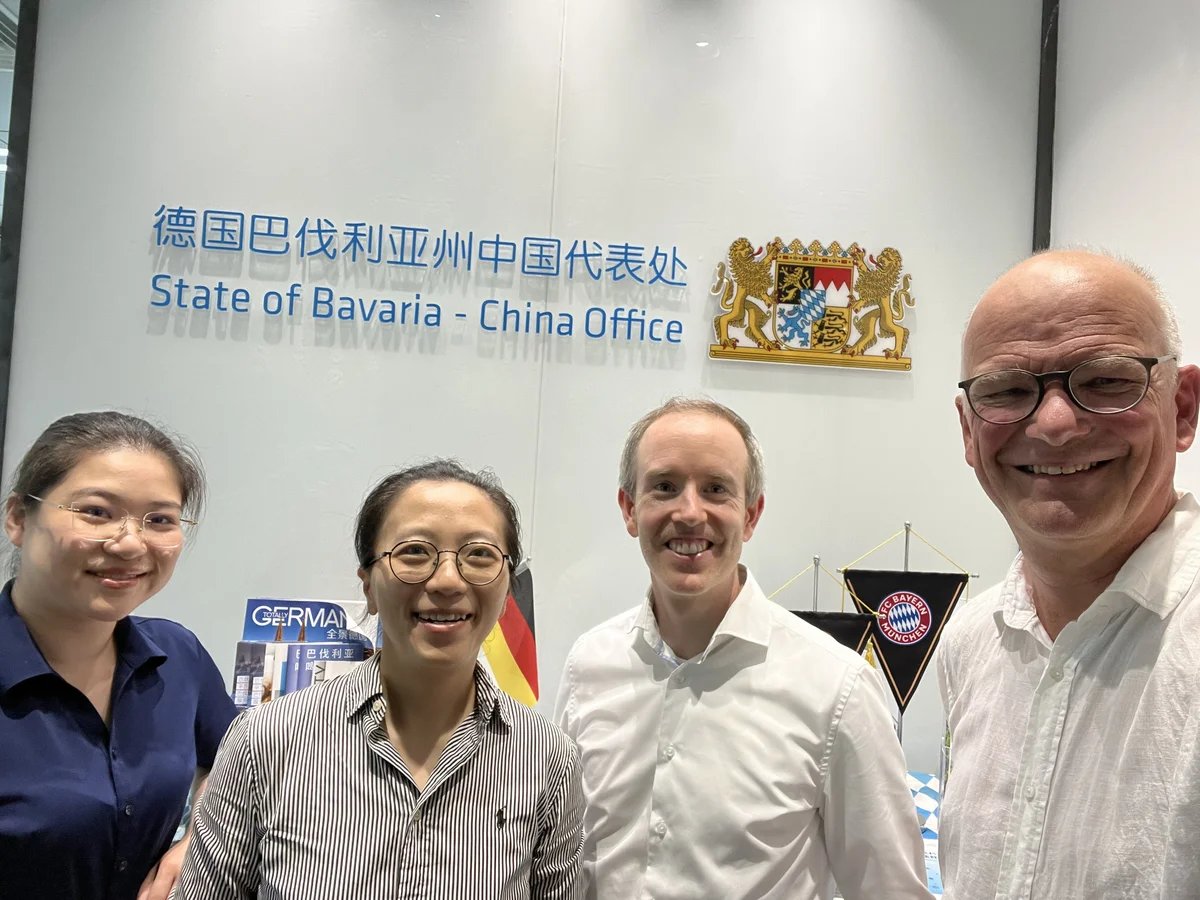
Better than you might think. For example, there is a TUM office at the Tsinghua Shenzhen International Graduate School (SIGS). With XNode, we talked about start-ups and international innovation ecosystems. We want to continue this exchange with the Munich contacts. In Hong Kong, similar questions arose at the Hong Kong Science and Technology Park (HKSTP). There was also an exchange with Dr. Xiaolong Ma from the Fraunhofer representation in China.
So there are already numerous connections between Bavaria and China. Now it's about networking them better and developing them into concrete projects.
In which areas could this lead to more?
In robotics and intelligent production, but also in the healthcare sector and life sciences. I also see interesting approaches in research funding and innovation management.
China has large research and clinical structures. New technologies can be used very quickly and on a larger scale there. In Bavaria, we have strong research, university hospitals, medical technology, pharmaceutical companies, and many innovative companies and start-ups. I see potential here to bring together the different strengths.
With all the professional discussions, how did you experience the personal encounters?
The personal encounters were one of the most important parts of the trip for me. We had many open and constructive discussions and saw great interest in further exchange with Bavaria. Especially given the geopolitical tensions, I find such contacts important. Only through direct conversation can you understand the interests and perspectives of the other party.
Personal contacts are one thing. At the same time, cooperation with China is criticized for potential dependencies and security risks. How do you assess that?
There are questions that we need to clarify carefully before a contact becomes a cooperation: How do we protect intellectual property? How do we handle health and research data? Could results also be used militarily? What dependencies arise? And do both sides have comparable opportunities and access?
What does this mean for cooperation in practice?
We need to know who we are working with, what interests our partners pursue, and where our own limits are. For me, it is important to distinguish between a professional exchange and a concrete cooperation. A conversation initially commits to nothing. If joint projects are to emerge from this, goals, benefits, and framework conditions must be clear.
But that's not a reason to talk less with each other. On the contrary: Direct exchange helps us understand developments better and realistically assess opportunities and risks. It's also worth discussing different approaches to AI governance and security.
And what's next after the trip?
We aim to further develop existing contacts and, together with our network, examine where concrete cooperation is sensible - particularly in AI, robotics, and healthcare, both in research and the start-up sector. A current example is the visit of a high-ranking delegation from the Shanghai Hospital Development Center (SHDC) on October 15 in Munich. Representatives from Siemens Healthineers from Shenzhen and Erlangen were also present, creating a direct connection to our visit to Siemens Healthineers in Shenzhen. The focus was on AI in healthcare and possible collaborations. Further follow-up talks are taking place on AI regulation and the networking of our start-up ecosystems. There are also points of connection for the planned China trip of Economics Minister Aiwanger in November.
I would be pleased if more players from Bavaria gathered their own experiences in China. Anyone who already works with Chinese partners or is interested in an exchange is welcome to contact us.