The human hand combines fine motor skills, adaptability and sensory perception in a remarkable way. What fascinates you most about it from a scientific perspective, and which of these capabilities would you particularly like to transfer to bio-inspired robotic hands and prostheses?
The human hand is extraordinary because it combines mechanical and neural intelligence. Every day, it allows us to explore the environment, manipulate objects, and communicate through a unique combination of dexterity, adaptability, and tactile information. It is not simply a highly dexterous tool - it can effortlessly adapt to objects of different shapes, sizes, and materials while continuously exchanging rich sensory information with the brain. We rarely think about the remarkable complexity behind even the simplest action, such as picking up a glass of water.
What fascinates me most is that these capabilities emerge from the seamless interplay between the hand, the brain, and the environment. We continuously adjust our movements, perceive even small changes in force or texture, and respond almost instantaneously, often without conscious effort. This is what inspires my research. Rather than asking how we can mimic the structure of the human hand, I focus on how we can recreate this ability to interact with the world in a functional and natural way. If a robotic hand can adapt to its user, respond safely to its environment, and support everyday activities with minimal effort, then the technology can become almost transparent to the user.
Your team is investigating how a person’s movement intentions can be identified using a large number of muscle sensors and machine-learning methods. What is needed for a hand prosthesis to be controlled truly intuitively, without users having to laboriously relearn each individual movement?
Today's prosthetic hands are technologically impressive, but controlling them can still require considerable mental effort from the user. Ideally, using a prosthesis should feel as natural as moving a biological hand. To achieve this, the prosthesis must learn from the user, rather than forcing the user to adapt to the device.
We use high-density surface electromyography together with artificial intelligence to capture movement intentions closer to their biological source. Rather than relying only on the overall activity of the muscles, our approach decodes the activity of individual motor neurons, which transmit movement commands from the nervous system to the muscles. This provides a much richer understanding of what the user intends to do and opens the way to prosthetic control that is more natural, precise, and responsive.
But intuitive control is only one part of the challenge. The prosthesis should also understand what is happening during its interaction with the environment. By combining tactile sensors with artificial intelligence, we aim to give the prosthesis the ability to detect events such as contact, object slip, or excessive force, and automatically respond when appropriate. This creates a form of shared intelligence, where users communicate their intention, while the prosthesis takes care of low-level adjustments required for safe and natural interaction with the world.
One of the main areas of your research is soft robotics. What advantages do soft and compliant materials offer for artificial hands, and how do you address the trade-off between adaptability, precision and suitability for everyday use?
One of the biggest challenges in robotics is enabling robots to operate reliably in unstructured environments. Unlike laboratory environments, where conditions are highly predictable, everyday settings are full of uncertainties: objects vary in shape, size, weight, and texture, and interactions with people require both adaptability and safety. The human hand addresses these challenges through its compliant structure of muscles, tendons, and soft tissues which naturally conform to different situations while maintaining stable and precise manipulation.
Soft robotics technologies take inspiration from these biological principles. Rather than relying solely on rigid structures, we design compliant robotic hands that can physically accommodate this variability. This makes grasping more robust, safer, and more effective in everyday situations. Of course, compliance also introduces engineering challenges. If a robotic hand is too soft, it may lose precision and dexterity. Our research therefore focuses on finding the right balance between compliance and precision, designing robotic hands that combine the flexibility needed to handle real-world variability with the reliability required for everyday use.
Your long-term vision is for assistive technologies to be perceived not as external tools, but as extensions of the user’s own body. How can this kind of “embodiment” be studied scientifically, and what roles do AI, sensory feedback and the brain’s capacity to adapt play in this process?
One of the greatest challenges in prosthetics is not simply replacing lost function, but making an artificial limb feel like part of the user. We refer to this process as embodiment: the extent to which the brain integrates a prosthesis into its internal representation of the body.
In our research, we combine behavioral experiments with neuroscience techniques to investigate how people perceive and interact with artificial limbs. We measure not only how well users perform a task, but also how their movement strategies and perception, as they gain experience with the prosthesis. Together, these measures help us understand when a device begins to be treated more like a part of the body than an external tool.
What needs to happen for intelligent prostheses and robotic assistance systems to move from the research laboratory into widespread clinical and everyday use? What kind of collaboration between researchers, clinics, users and companies is particularly important to achieve this in Bavaria?
To make intelligent prostheses and robotic assistance systems part of everyday clinical practice, they must be reliable, intuitive to use, affordable, and demonstrate a clear benefit for patients. Achieving this requires close collaboration between engineers, clinicians, neuroscientists, industry partners, and—most importantly—the people who will ultimately use these technologies. End users should not simply evaluate finished devices, but should actively shape their development from the very beginning.
Translation depends not only on technological innovation. New devices must be rigorously validated in clinical studies, meet regulatory and safety requirements, and be supported by sustainable coverage pathways. Equally important is user acceptance: even the most advanced technology will have little impact if it is difficult to use or does not address the real needs of patients and clinicians.
What makes Bavaria particularly unique is the commitment to transform scientific excellence into clinical innovation, especially in the field of neurotechnology. The recent brain-computer interface implantation at TUM University Hospital Rechts der Isar is an excellent example. It demonstrates the courage to push the boundaries of translational research in a responsible way. This kind of ambition is essential if we want innovation to make a real difference in patients' lives. Combined with Bavaria's strong ecosystem of universities, hospitals, research institutes, and technology companies, it creates a unique environment for developing the next generation of intelligent assistive technologies.
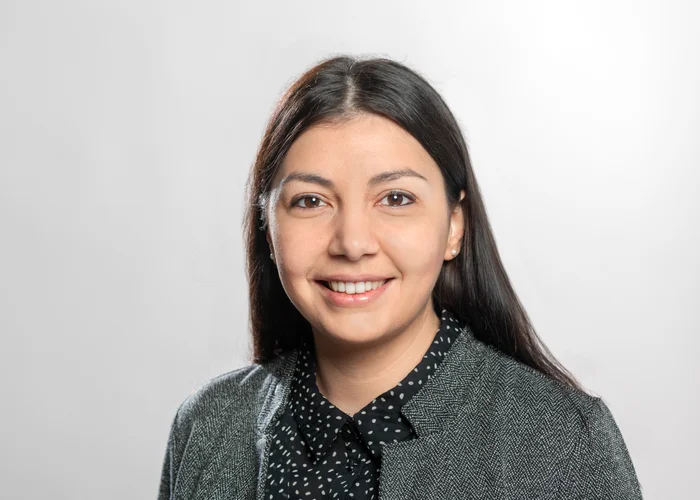
Prof. Cristina Piazza develops bio-inspired robotic hands, intelligent prostheses, and control methods that enable more natural and intuitive grasping. Her research combines robotics, neuroscience, and rehabilitation engineering to create assistive technologies that adapt more closely to the human body. Following research positions at Northwestern University and the Shirley Ryan AbilityLab in Chicago, she joined TUM in 2020. In 2026, she received the IEEE RAS Early Academic Career Award.